Peru 🇵🇪 Sacred Valley
October 8 and 9, 2021

We drove through beautiful mountains on winding narrow roads with no guard rails. Luckily the views were unbelievably beautiful so we did look what the bus could tumble down off the side!:)

It is widely agreed these depression were used for farming. As most Inca ruins, these have Irragation systems that have yet to be fully understood


In the countryside right outside of Moray, Carlos set up a visit with women from a village Co- op high in the Andes to come down to give us demonstrations of hand crafting garments from llama (in Peru it is pronounced “Yaa ma”) wool. They still use the ancient methods passed down generations. 
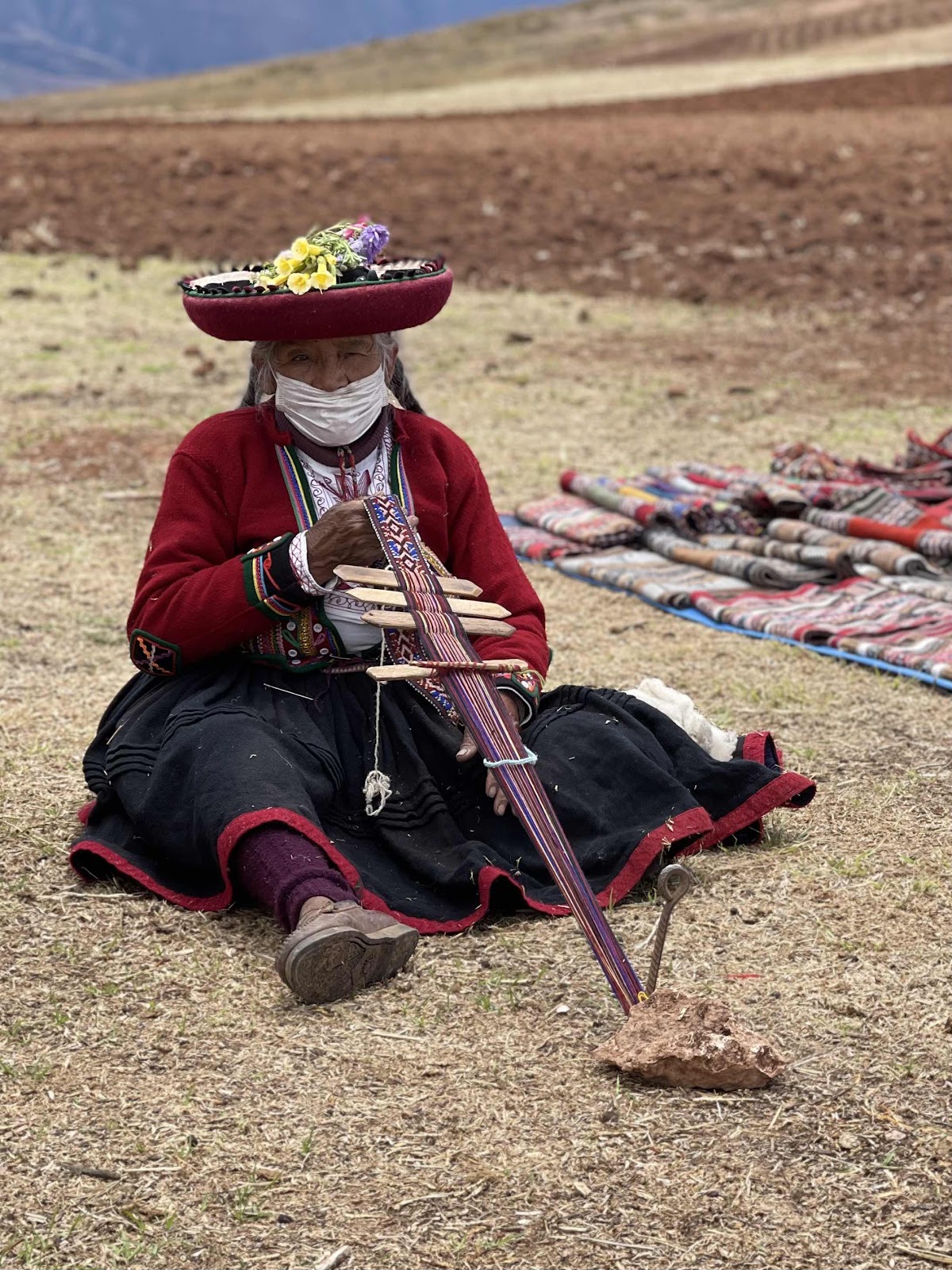
Weaving. ….

This amazing woman is 80 years old and still walking up and down the mountains!!!!

Then we are shown how the woman wrap and carry babies. They can just swing them around the front to nurse. The women are the ones who always carry the babies while they work, walk etc.

This little girl is 2 years old and NOT happy about the demonstration! They told us once the children can walk- they want to walk and not be carried. When children misbehave they are put back on mommy’s back as a punishment…. Sounds like more of a punishment for mommy !!!!!

We were able to buy wonderful items that were made in their village Co-op. Guides explained that items sold in the big open markets are mostly not made sustainably and also not made in Peru… Carlos and Harvey were reluctant to answer the question I asked regarding this since as guides it is not for them to “tell us where and what to buy”. But I appreciated their honesty and it is what I was thinking to begin with!
Next stop - Ollantaytambo which has some of the oldest continuously occupied buildings in South America. It was once a stronghold of Inca resistance to Spanish colonization.
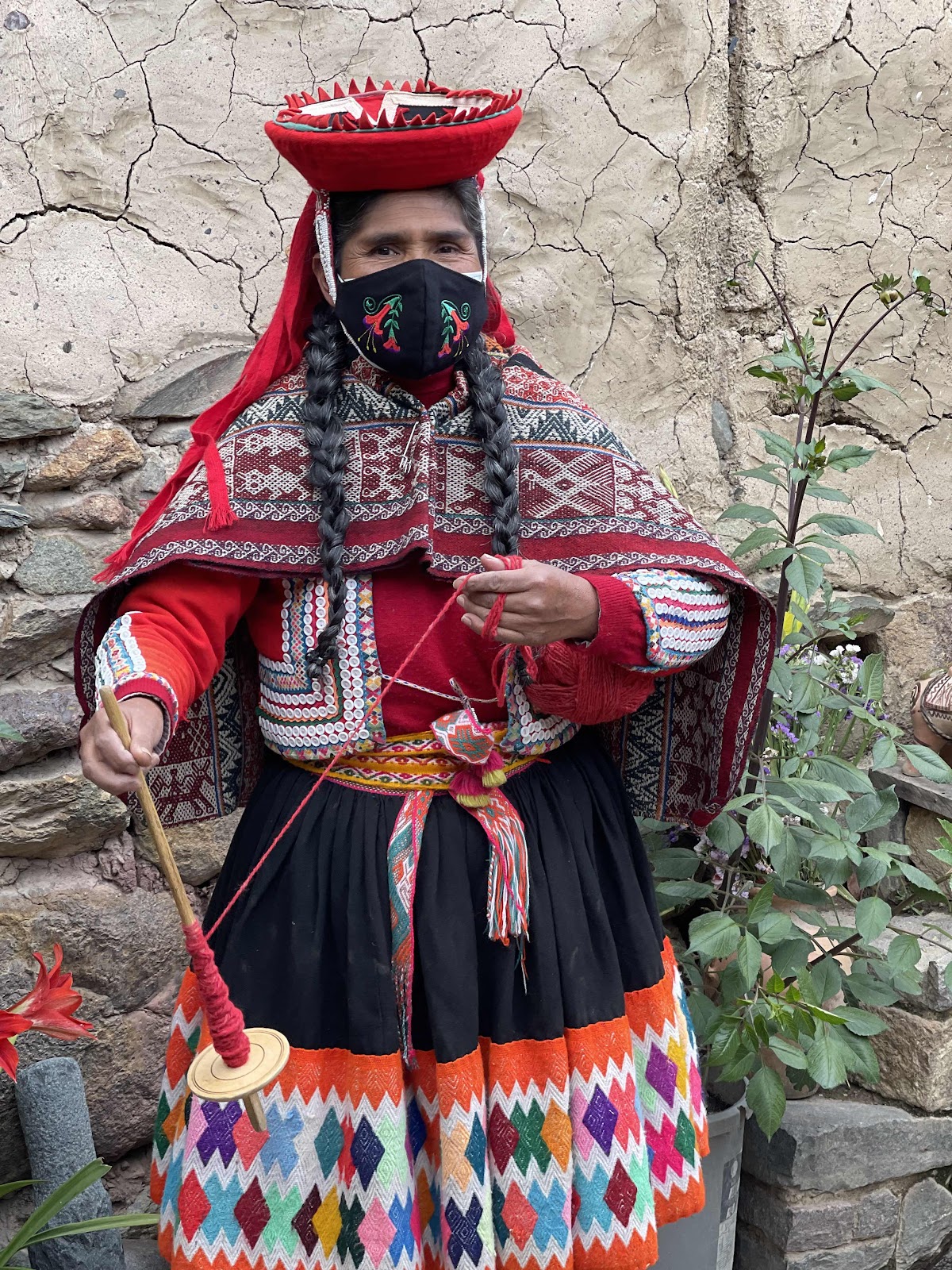
Rosa never stopped spinning her yarn!

This is the one room home of Rosa’s where she brought up her 2 daughters. Her daughters still live close by her but are “modernized”. They keep wanting their mother to move in with them but she will not move from the house she always lived in


Rosa’s bed

The table to eat

Rosa’s stove and cookware. Guinea pigs are a common food for highland people and Rosa had a few live guinea pigs in a stone pen next to her stove!!! You can see it in right side of this picture

Peru has over 4,000 types of potatoes! Idaho and Ireland, you guys have noting on Peru’s potato fame!!!
You find these bulls in front or on top of most dwellings to protect the household

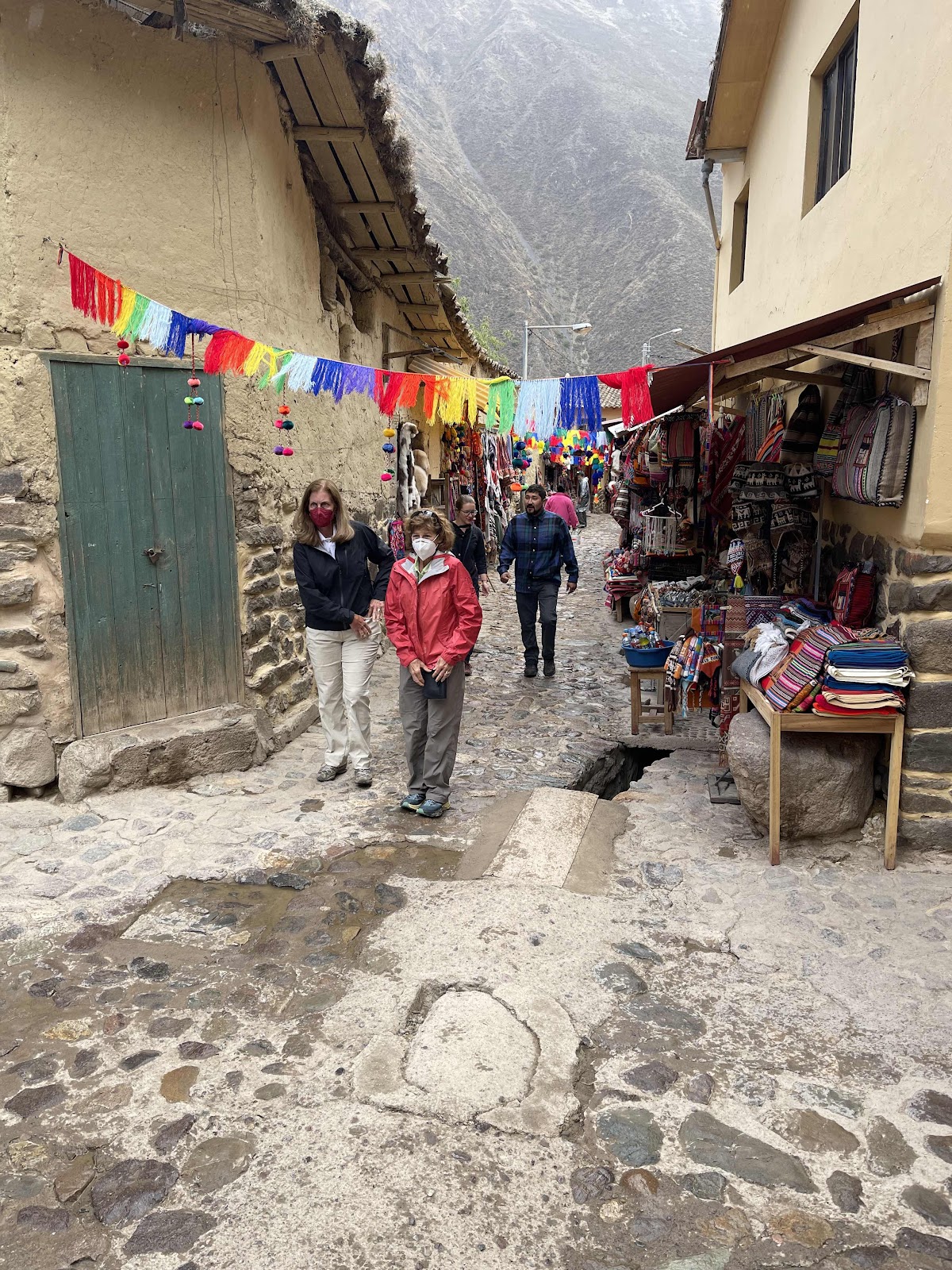
Streets of Ollantaytampo still have a lot of the Inca stone structures as bases for homes and shops
Priscilla and Carolyn in Ollantaytambo


The direct flight from Iquitos to Cusco was canceled so we had to fly to Lima then to Cusco. At the Lima airport we said goodbye to Marleen and Richard (FL) who were not doing the Machu Picchu portion of the trip. Now there are 13 of us!
When we landed in Cusco (approximately 12,000 ft ) we got straight on our bus and headed to The Sacred Valley (7000 to 8,000 ft). Doing the trip this way helped us acclimate to altitude. The hotel we stayed at in Sacred Valley was the one we all were so excited about. Check out “Tambo del Inka”!! Dreams of spa treatments and relaxing in it’s luxurious environment were crushed because of flight cancellations/ re routing. We arrived after 10 PM and up early to move on…
October 9, 2021 AM
The Sacred Valley is a region in Peru’s Andreas highlands. It forms the heart of the Inca Empire.
We drove through beautiful mountains on winding narrow roads with no guard rails. Luckily the views were unbelievably beautiful so we did look what the bus could tumble down off the side!:)
Moray is an archaeological site in Peru that contains Inca ruins - mostly consisting of terraced circular depression. The largest is 98 feet.
It is widely agreed these depression were used for farming. As most Inca ruins, these have Irragation systems that have yet to be fully understood
The terraces are made up of different soil combinations at each level. The depth, design and orientation with respect to wind and sun creates a temperature difference of as much as 27 degrees F between top and bottom
In the countryside right outside of Moray, Carlos set up a visit with women from a village Co- op high in the Andes to come down to give us demonstrations of hand crafting garments from llama (in Peru it is pronounced “Yaa ma”) wool. They still use the ancient methods passed down generations.
These women walked down from their villages (from about 14,000 ft elevation) to give us this demonstration. It is over 3 hour walk carrying supplies and babies. They are all used to these treks!!!


Showing how wool is cleaned

Spinning wool

Showing how wool is cleaned
Spinning wool
Showing us how wool is dyed. The white beads are beetles found inside cactus. When rubbed together in hands they turn bright red. Then different plants are added to this red color to make the other colors- brown, orange, yellow , purple etc
Weaving. ….
This amazing woman is 80 years old and still walking up and down the mountains!!!!
Then we are shown how the woman wrap and carry babies. They can just swing them around the front to nurse. The women are the ones who always carry the babies while they work, walk etc.
This little girl is 2 years old and NOT happy about the demonstration! They told us once the children can walk- they want to walk and not be carried. When children misbehave they are put back on mommy’s back as a punishment…. Sounds like more of a punishment for mommy !!!!!
We were able to buy wonderful items that were made in their village Co-op. Guides explained that items sold in the big open markets are mostly not made sustainably and also not made in Peru… Carlos and Harvey were reluctant to answer the question I asked regarding this since as guides it is not for them to “tell us where and what to buy”. But I appreciated their honesty and it is what I was thinking to begin with!
Good bye and thank you all dear ladies for this wonderful memory!!!

Windy mountain roads in our bus. Hard to tell from these pictures, but drop offs were quite dramatic! Roads being very narrow, two vehicles could not pass one another. The rule here is the vehicle going downhill has to back up and move over where possible for the uphill vehicle Luckily the roads are not widely traveled.

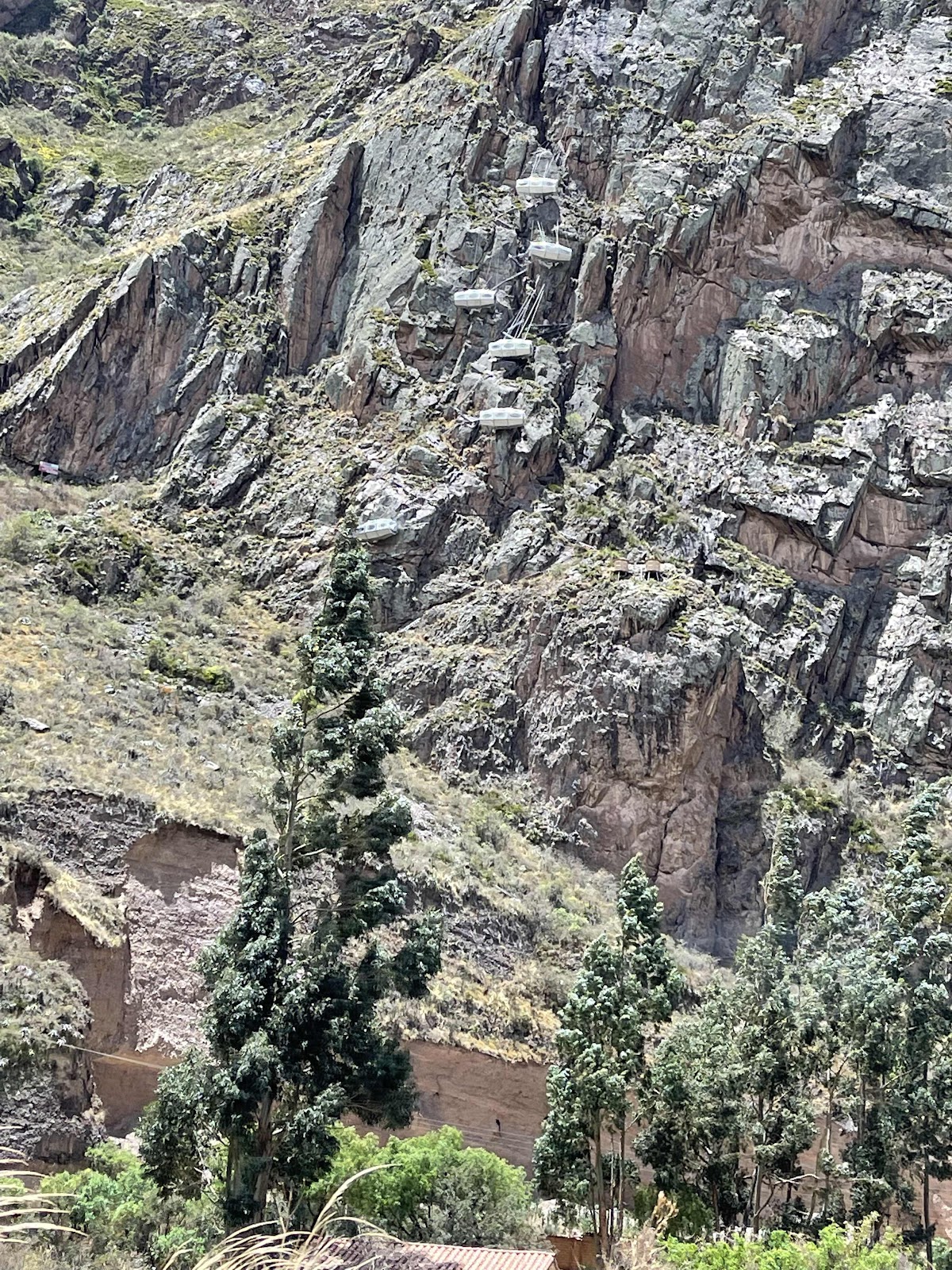


Seen below - distant white object on right side up in the mountain…… These are “sky pods” you can mountain climb to and spend a night. Our highland guide , Harvey, said these below were the easy ones to reach !!!! Next day occupants either repell or zip line down!
Windy mountain roads in our bus. Hard to tell from these pictures, but drop offs were quite dramatic! Roads being very narrow, two vehicles could not pass one another. The rule here is the vehicle going downhill has to back up and move over where possible for the uphill vehicle Luckily the roads are not widely traveled.
Seen below - distant white object on right side up in the mountain…… These are “sky pods” you can mountain climb to and spend a night. Our highland guide , Harvey, said these below were the easy ones to reach !!!! Next day occupants either repell or zip line down!
Next stop - Ollantaytambo which has some of the oldest continuously occupied buildings in South America. It was once a stronghold of Inca resistance to Spanish colonization.
Carlos arranged for us to meet Rosa and be invited into her home!
Rosa never stopped spinning her yarn!
This is the one room home of Rosa’s where she brought up her 2 daughters. Her daughters still live close by her but are “modernized”. They keep wanting their mother to move in with them but she will not move from the house she always lived in
Rosa’s bed
The table to eat
Rosa’s stove and cookware. Guinea pigs are a common food for highland people and Rosa had a few live guinea pigs in a stone pen next to her stove!!! You can see it in right side of this picture
Peru has over 4,000 types of potatoes! Idaho and Ireland, you guys have noting on Peru’s potato fame!!!
Here Rosa is showing us how she grinds petrified potatoes for a type of flour. Side note- while this is a very fine powder, it stinks!!!
You find these bulls in front or on top of most dwellings to protect the household
Streets of Ollantaytampo still have a lot of the Inca stone structures as bases for homes and shops
Priscilla and Carolyn in Ollantaytambo


Comments
Post a Comment